2026.01.11 Sunday 15:00
Location
Fotografiska, No.127 Guangfu Road, Jing’an District, Shanghai
Artist:Cheng Xinhao
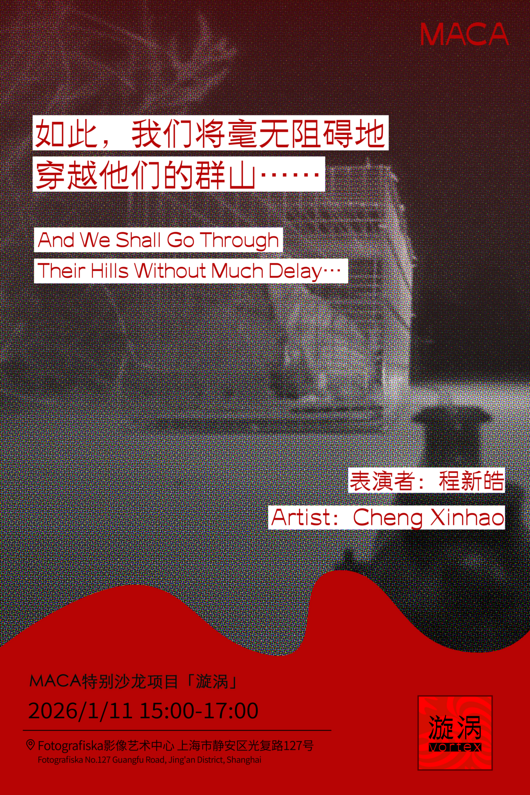
A triptych of narratives unfurls here, tracing three separate expeditions that departed from Yunnan only to dissolve into the unknown.
The year was 1638. Explorer and geographer Xu Xiake, two years into his travels, entered Yunnan and pressed toward the distant frontier of the Ming empire. Moving north from Yunnan’s provincial center, he sought to reach the Jinsha River and verify whether it was indeed the true source of the Yangtze River. How would Xu Xiake navigate mountains and waterways yet unnamed, and journey toward a destination both precisely determined yet utterly unfamiliar?
The year was 1885. The young British translator Augustus Raymond Margary set off from Shanghai, following the lead of rivers and the Post Road into Yunnan towards the Burmese border. There, his charge was to greet a group of colonial explorers on a mission to develop a trade route, guiding them back into Yunnan. As Margary became comfortable communicating with locals, his faith in the expedition’s purpose deepened. However, wishful thinking and clouded judgment were two sides of the same coin, carrying him toward a fate he was not yet able to fully grasp.
The year was 1937. A small group of Naxi people boarded a train along the Kunming–Haiphong Railway toward the national border and port. For them, the train was an alien object, a place fundamentally misaligned with every prior experience. How did they, with the temporalities and bodies of theirs rooted in pre-modern daily existence, travel through time and space via this new technology?
These three expeditions, separated by centuries and shaped by vastly different world pictures, nonetheless shared the same conceptual trajectory: mediated by various technical objects in their transit between the body and the land as a background, they opened up a space for localized experience, one that was dialectically born from their non-smooth encounters. Such space is granted only in retrospect, realized at the journey’s terminus. It materializes exclusively within the accumulated frictions between the physical body and the terrain it has traversed.
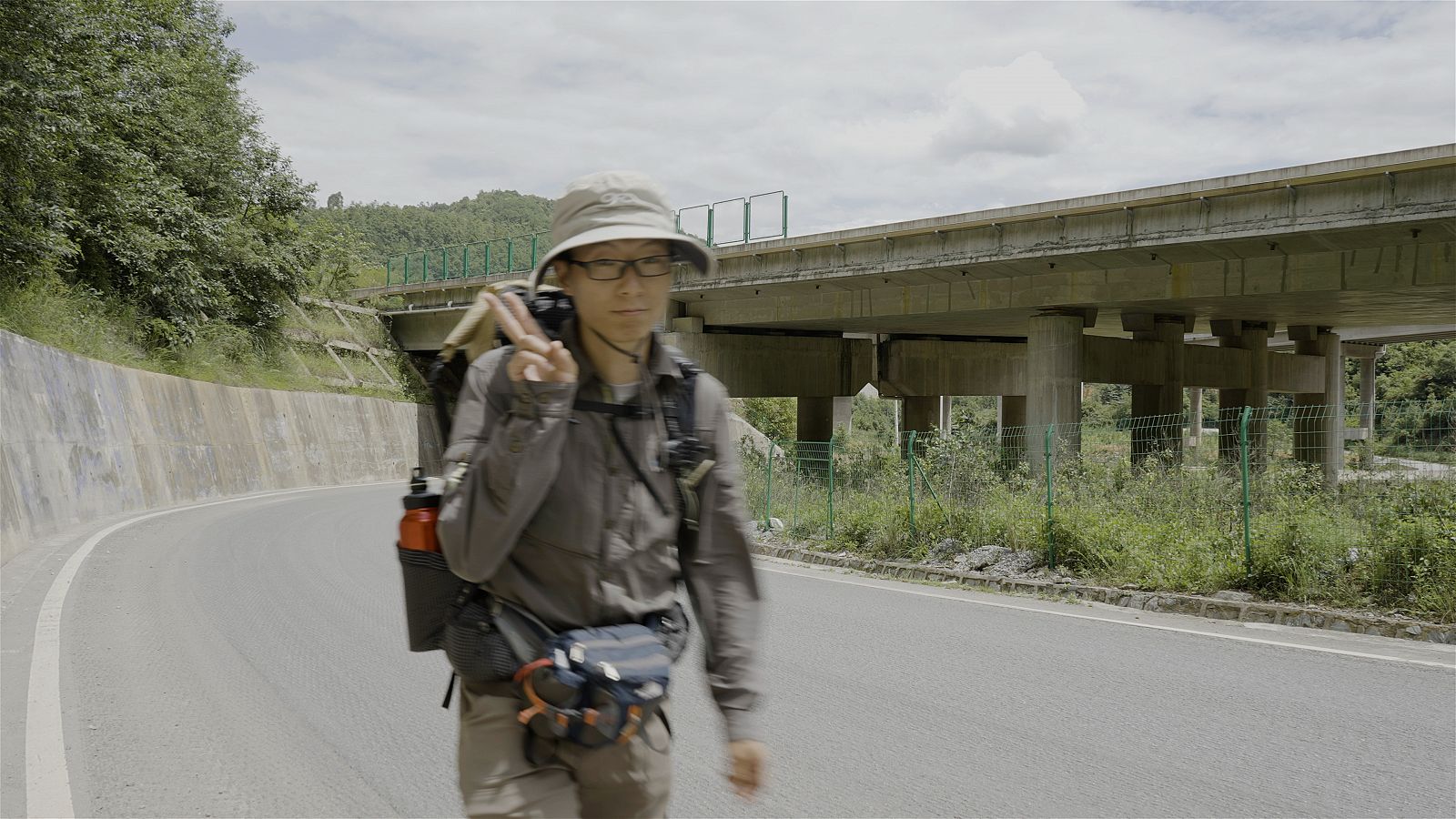
Cheng Xinhao (b.1985 in Yunnan Province, China) currently lives and works in Kunming, China. He received his Ph.D in Chemistry from Peking University in 2013. Cheng’s works are usually based on long-term field studies, centered around his hometown in Yunnan Province. With videos, installations, photographs and words, he personally investigates the polyphonic relationships between logic, discourses, knowledge, and the ways in which nature, society, and history play within them.
VORTEX, launched by the MACA in Shanghai in 2022, is an art and cultural salon in the form of lecture performances occurring once or twice every month. The programme calls for non-institutionalised artistic and academic production in which contemporary art practitioners and scholars get to explore cross-disciplinarily the issues of the macro or micro, the global or local, the collective or individual. VORTEX, hence, is where you spin in the whirlpool of spontaneous whims and intuitive approaches represented by individual research and enquiries. Being present here at VORTEX, you are experiencing versatile forms of lecture performances that experiment with new mechanisms and methodologies.