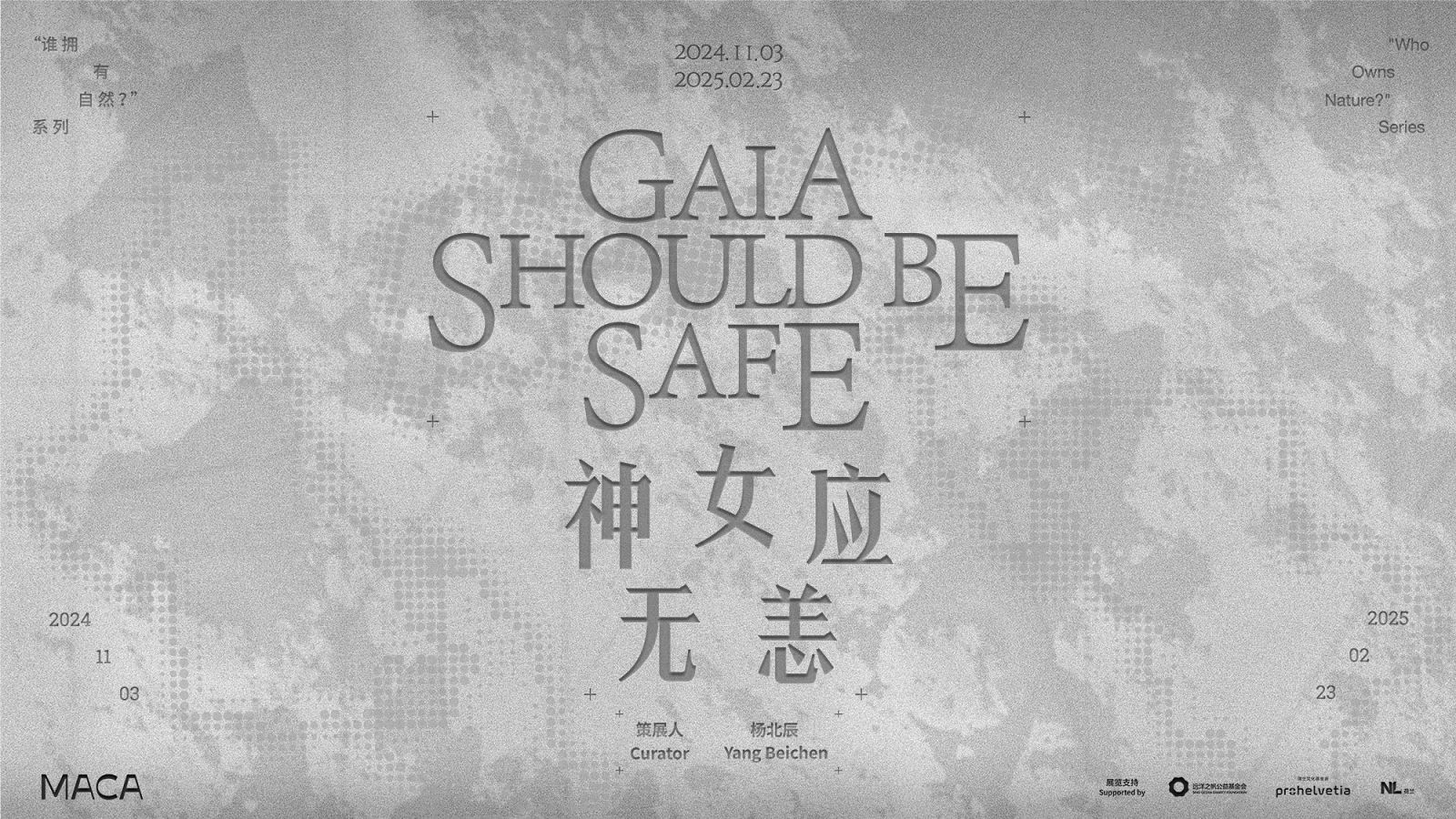
 Gaia Should Be Safe
Cyclones, Islands, and Wireless: How the Waves of the Global South Shaped the Modern World
2024.12.15 Sunday 15:00
Location
MACA Art Center
Speaker: Qiu Zhenwu
.png?w=1600)
Discussions around wireless are often associated with Tesla, Guglielmo Marconi's transatlantic radio in 1901, and the dominance of the "Global North" in modern scientific progress. The birth of the modern world has taken place in the modern Waves Across the South, such as the long-neglected Bay of Bengal.
In 1905, to deal with the frequent tropical cyclones that ravaged the region, British colonizers introduced wireless equipment on the Andaman Islands, located on the eastern side of the Bay of Bengal. This made the islands one of the first regions in the British Empire to experiment with radio technology as well as sparked a global wave that led to the establishment of the "Imperial Wireless Chain."
The introduction of wireless on the Andaman Islands was not only part of an imperial agenda but also reflected the development dynamics of nationalism along the coastal areas of the Bay of Bengal. This lecture will explore the relationship between cyclones, islands, and wireless in the Bay of Bengal, while uncovering the complex entanglements between the non-human world and the commercial, scientific, and power structures within the Anglo-Indian colonial system.
About the Speaker: Qiu Zhenwu
Qiu Zhenwu is a lecturer in the History Department at Nanjing Normal University. He earned his Ph.D. from Tsinghua University and was a joint Ph.D. student at King's College London from 2021 to 2022. His research primarily focuses on environmental history, the history of science and technology, and global history. His work explores topics such as the circulation of knowledge, species transplantation, meteorological observation, environmental transformation, and infrastructure development in the British Empire, with a particular emphasis on South Asia and the broader tropical regions. He is also interested in ecological anthropology in the Global South.