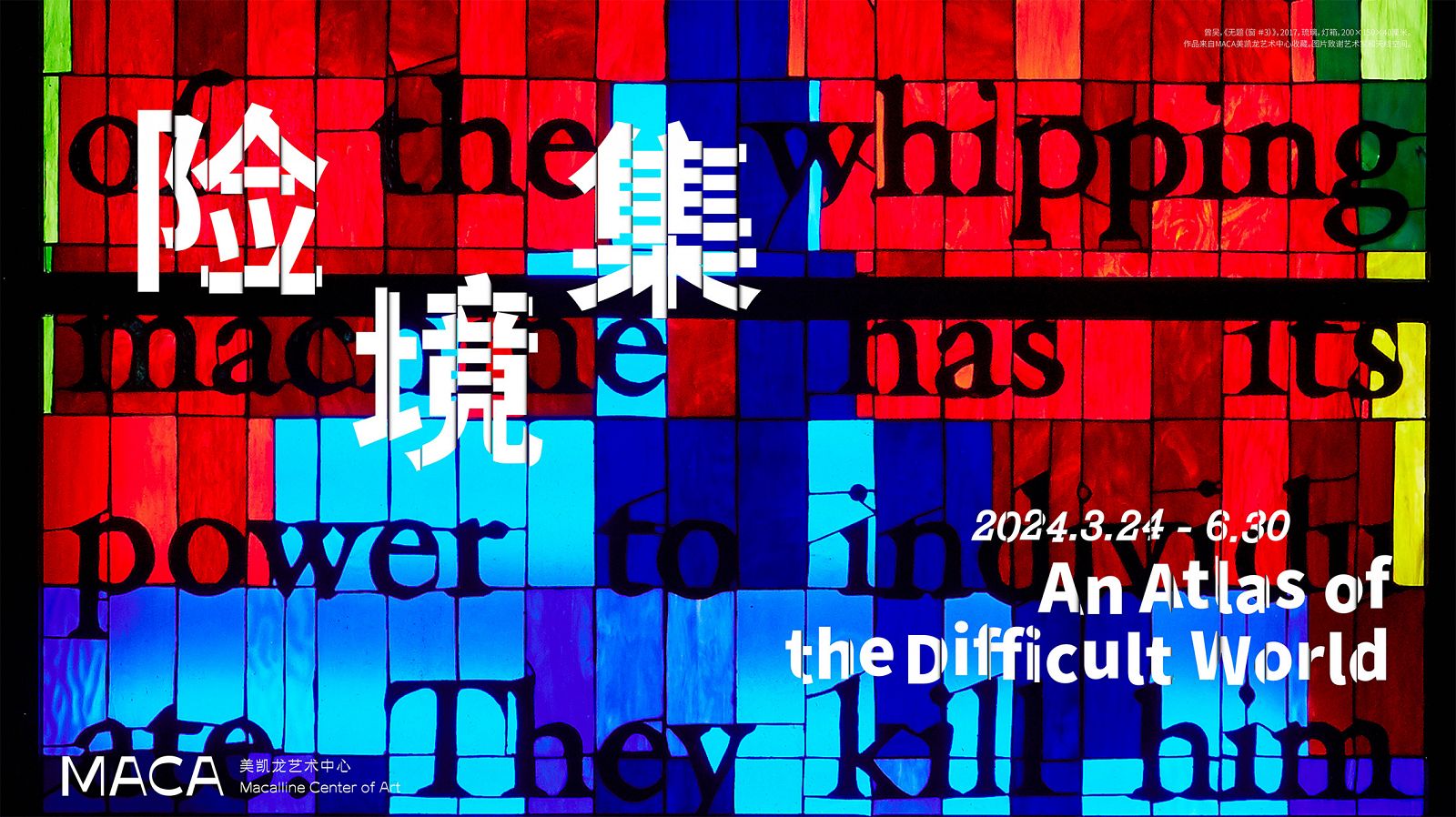
 An Atlas of the Difficult World
Wind Chime Conjury: A Conversation on Ruins, Afterlife and Materialisation
2024.05.26 Sunday 16:00
Location
MACA Art Center
Speakers:Feng Zhixuan, Harriet Min Zhang
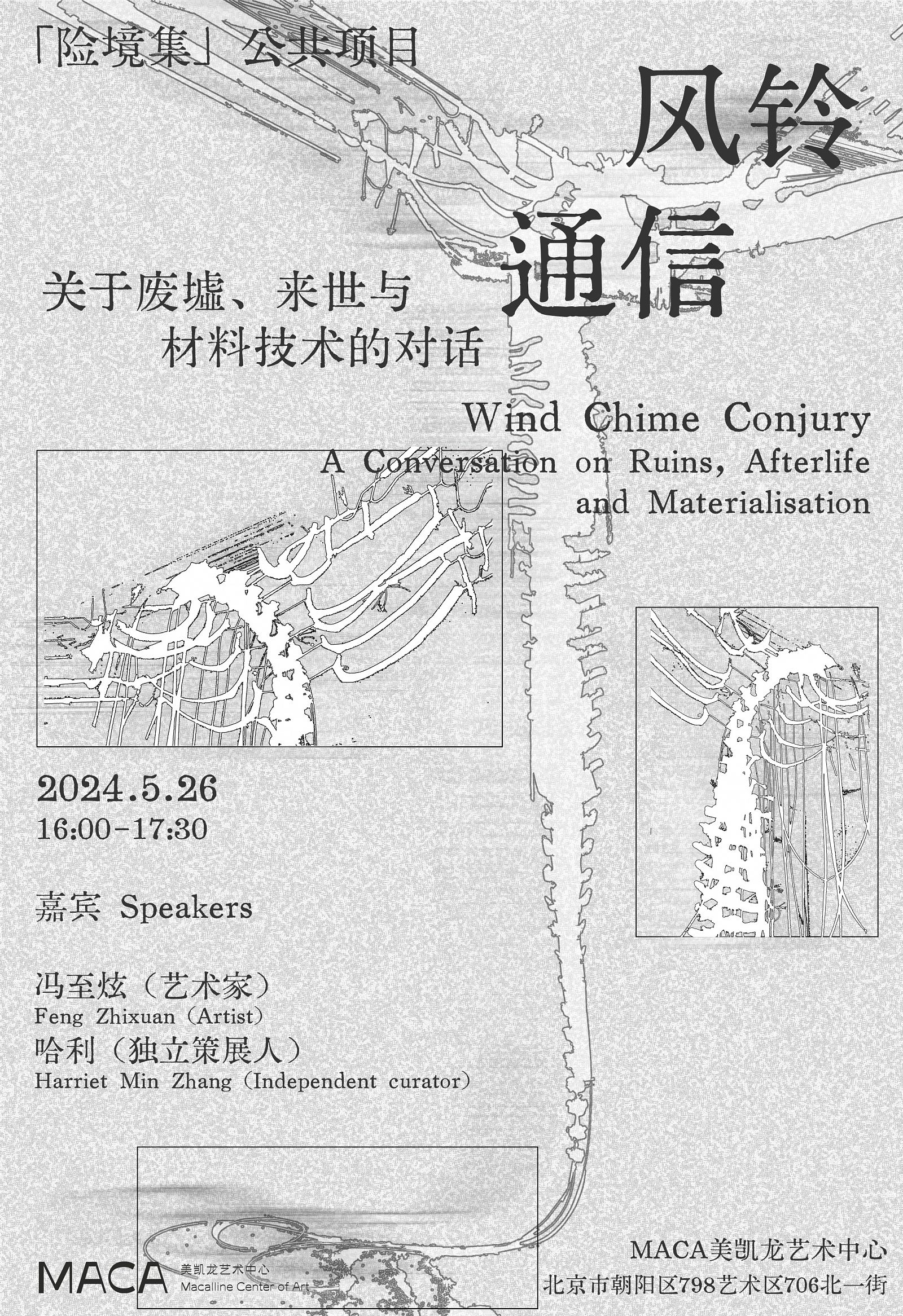
"Wind Chime Conjury: A Conversation on Ruins, Afterlife, and Materialization" is a public program featured in the current exhibition "An Atlas of the Difficult World" at the MACA. Departing from the commissioned artwork "Wind Chimes - Sousa Chinensis" created by Feng Zhixuan, MACA invites artist Feng Zhixuan and independent curator Harriet Min Zhang to engage in a conversation. Why are humans fascinated with collecting and displaying animal skeletons? How do decayed organisms and ruins reappear and manifest otherwise in the Anthropocene? What material tensions exist between biological bodies and modern industrial materials and technologies? Inspired by the methodology of ethnographic studies, Zhang will explore the process of materialization in Feng Zhixuan's art practices. The conversation will be a curated content of spoken words entailing the rationale behind Feng’s previous works in response to the current ecological environment, accompanied with fragments of sound pieces, texts and images.
About the Speakers:
Feng Zhixuan (b. 1993, Zhejiang, China) received his BA from China Academy of Art in 2015 and MA from Royal College of Art in 2018. He is constantly inspired by multiple life and artistic experiences. His work provokes cultural resonance through gradations of non- fictional materials, which he uses to produce historical action. The cultural elements in his works are revealed from a highly personalized material form, transformed through historical and improvisational narratives, thus creating nomadic civilizations that function across time and space.
Harriet Min Zhang is an independent curator and writer, with a Bachelor's degree in Social Anthropology from the School of Oriental and African Studies, and a Master's degree in Curating Contemporary Art from Royal College of Art.