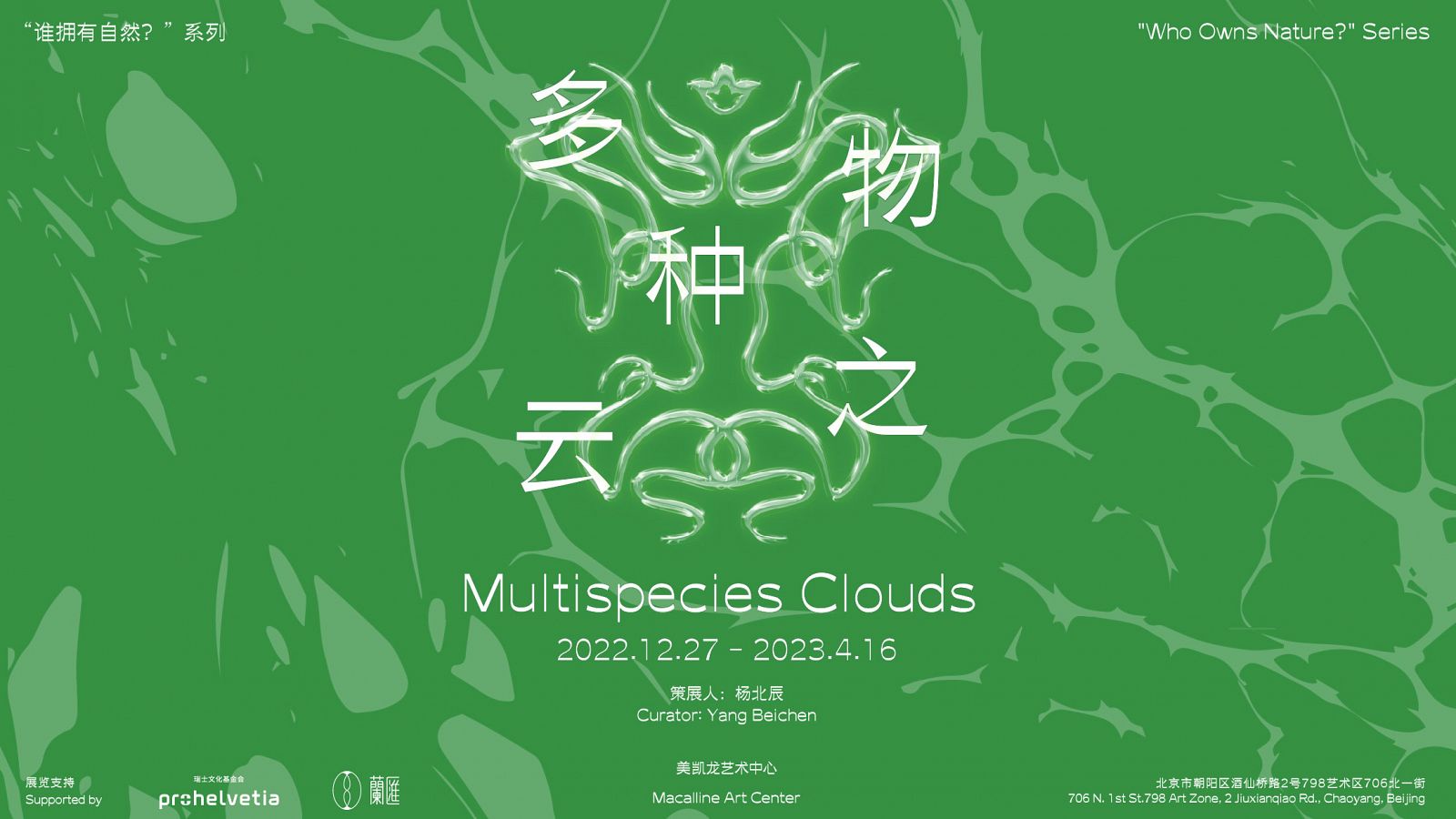
 Multispecies Clouds
Amnesic Shellfish Poisoning, Punch Cards, and Steamships
2023.03.25 Saturday 14:00
Location
MACA Art Center
Speaker: Fei Yining
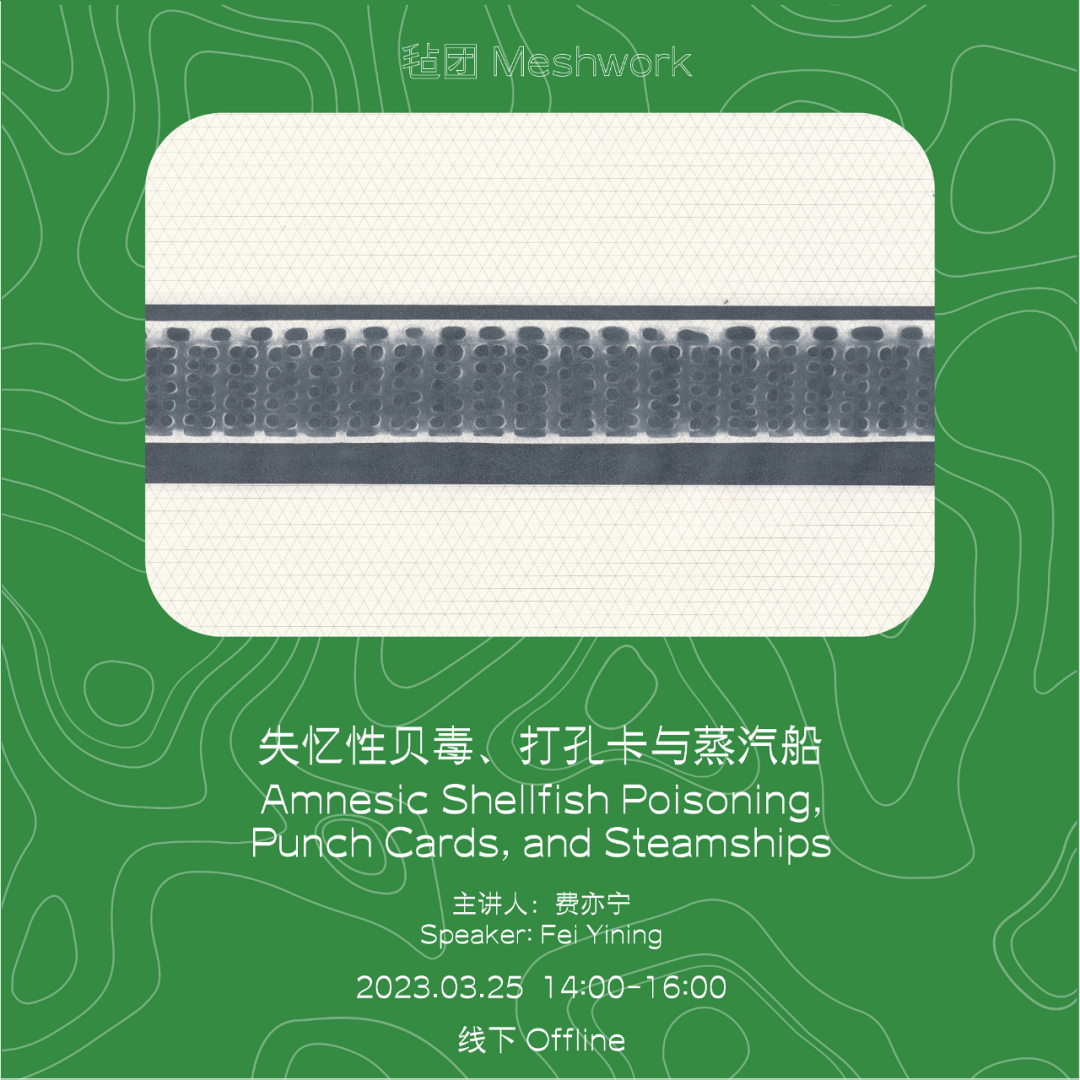
Domoic acid is a poisonous substance that closely resembles excitatory neurotransmitters in structure. It can cause neuroexcitatory poisoning, tricking neurons into continuously transmitting signals until death, and typical symptoms include memory loss and confusion. This neurotoxin is metabolized by a diatom called Pseudo-nitzschia Peragallo, which is widely distributed in coastal waters worldwide.
However, when observing this toxic diatom under a transmission electron microscope, one would be surprised to find that it resembles a human-invented memory storage medium such as film or punch cards used by the precursor of computers (the difference engine and analytical engine) in different dimensions. This remarkable coincidence of visual and structural features appears like a "message in a bottle" sent from deep time. The artist endeavors to shuttle between multiple possible moments when this fictional "message in a bottle" could have washed ashore and make connections.
She commences by recounting the tale of Ada Lovelace and Charles Babbage, who collaborated on the Analytical Engine, the forerunner of computers, during Victorian England. The government's last two years of support for the Analytical Engine's development happened to coincide with the First Opium War, during which the first steam-powered warship to enter the Indian Ocean, HMS Nemesis, was seized by the British. Fossil fuels, which were previously considered an "inert" resource, began to play a role in violent forms.
If this is the story's beginning, then in the artist's imaginary future branch, there is one conclusion where the algal toxin from deep time will no longer remain inert but instead overflow uncontrollably, forcing humans to merge with non-human intelligence or transfer love to the life forms we create.
About the Speaker: Fei Yining
FEI Yining is an artist who lives and works in Shanghai.Fei Yining's works draw threads from the veins of literature, mythology, and science, and through the media of video, installation, and sculpture, she reweaves a web of narratives that are both real and fantastical, presenting a mysterious and grotesque aesthetic. Wandering through multiple times and spaces, theoretical prose and poetic texts, Fei's works can be seen as a prophetic vision that combines science and fantasy, a speculation of a post-apocalyptic scenario that is increasingly full of uncertainty.

About the Project Curator: Yang Beichen
Dr. Yang Beichen is a researcher and a curator based in Beijing, China. He is the director of the MACA(Beijing), and one of the members of the Thought Council at the Fondazione Prada (Milan, Venice).