 An Atlas of the Difficult World
Feng Zhixuan: Wind Chimes - Sousa Chinensis
.jpg?w=1600)
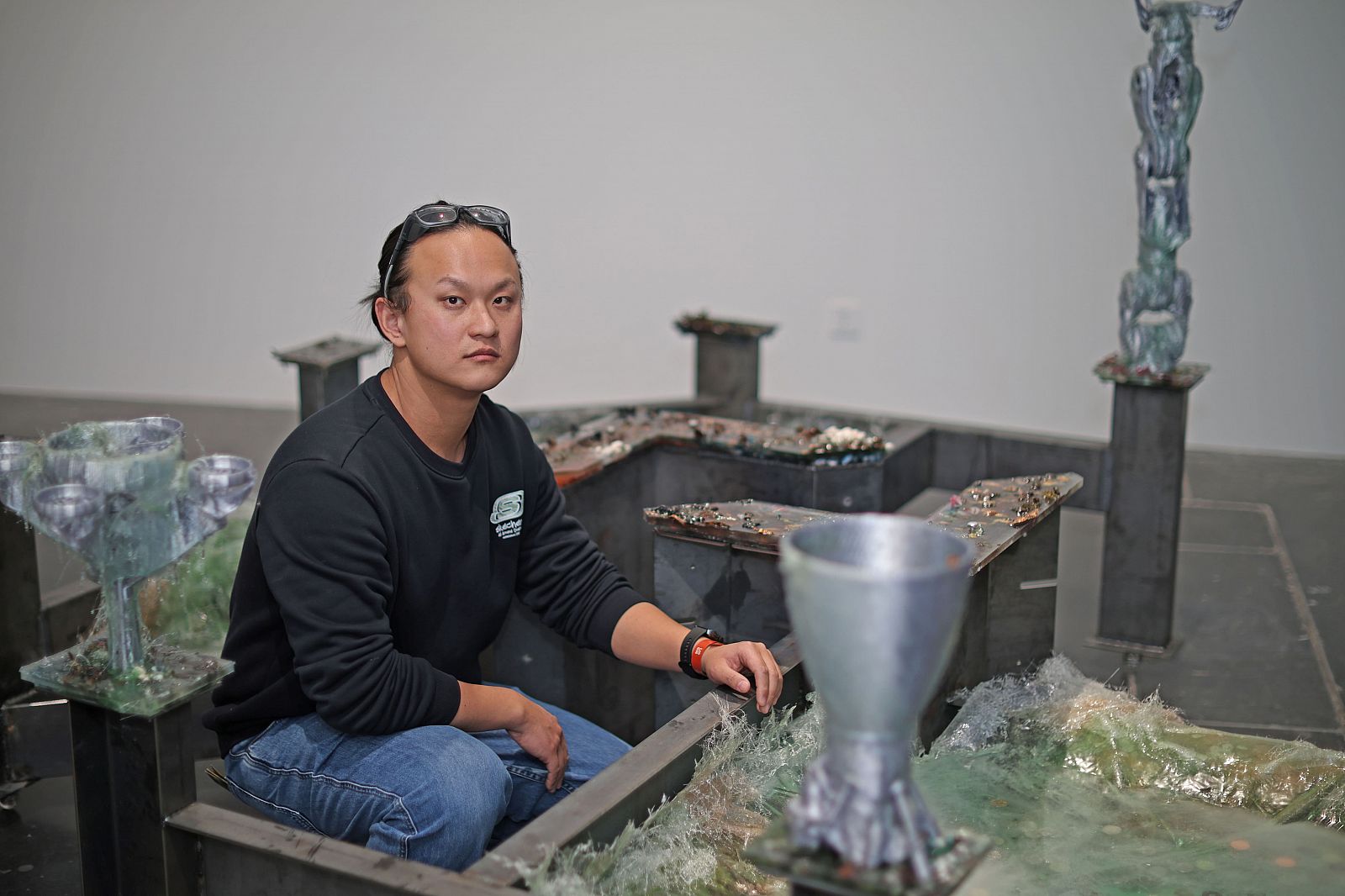
An Atlas of the Difficult World, installation view, MACA, 2024. Photo: Yang Hao
Feng Zhixuan
Wind Chimes - Sousa Chinensis
2024
Aluminum, steel
Dimension variable
Wind Chimes - Sousa Chinensis seeks to transcend the constraints of time through artistic practices. Blending traditional sand-casting techniques with 3D printing, the work uses aluminum to recreate the skeleton of a Sousa Chinensis, commonly known as the Chinese white dolphin. Stone age technologies of boat building, fishing tool making, and weapon development seamlessly merge with the modern-day manufacturing of alloy fasteners. This endangered species is thus endowed with new form and meaning. Gracefully suspended in the sky, the sculpture resembles a celestial being descending, its quivering wings seemingly whispering a tale of the alternation and resonance between the fragile and the magnificent.
About the Artist
Feng Zhixuan (b. 1993, Zhejiang, China) received his BA from China Academy of Art in 2015 and MA from Royal College of Art in 2018. He is constantly inspired by multiple life and artistic experiences. His work provokes cultural resonance through gradations of non-fictional materials, which he uses to produce historical action. The cultural elements in his works are revealed from a highly personalized material form, transformed through historical and improvisational narratives, thus creating nomadic civilizations that function across time and space.